
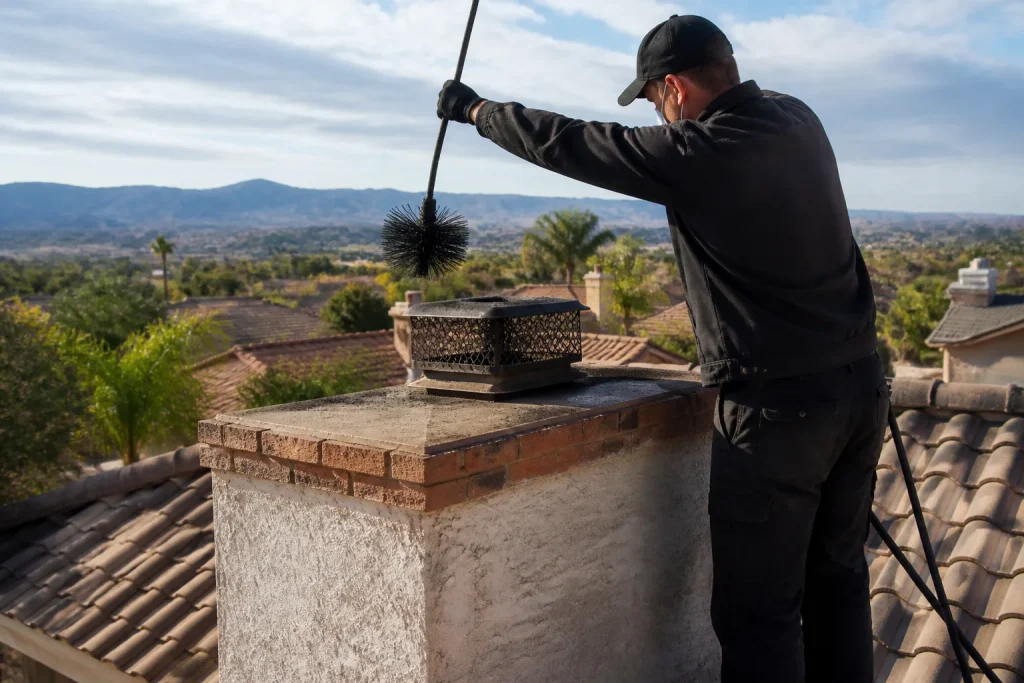
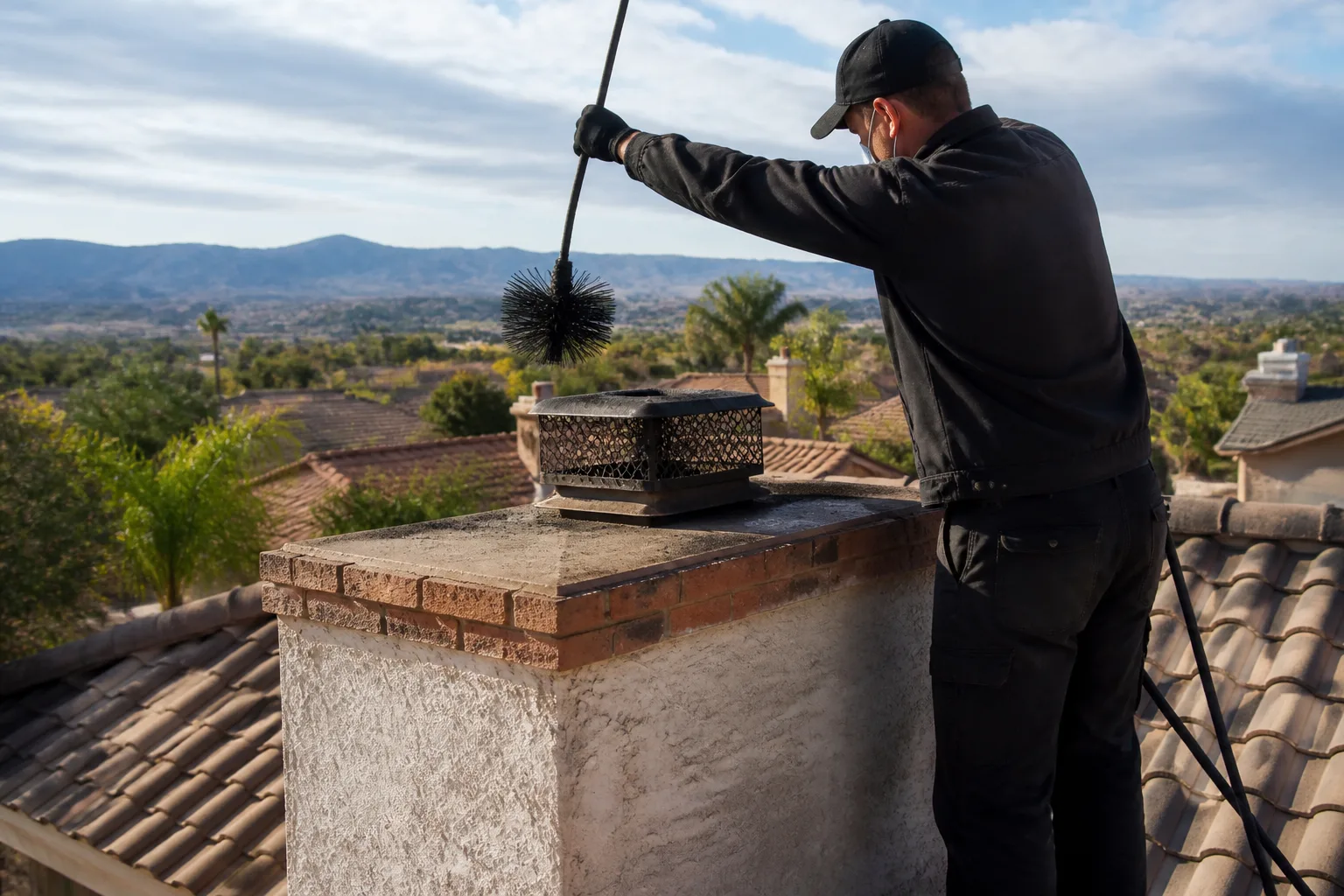
Emergency Chimney Sweep Near Me: What Yorba Linda Homeowners Should Do First
Calling for an emergency chimney sweep before you stop using the fireplace is the mistake that turns a repair into a disaster. Every fire you light while smoke is backing up or a flue is compromised adds heat and stress to a system that’s already telling you something is wrong. The right first move isn’t dialing a number. It’s three steps: stop burning, close the damper, and ventilate. Do those first, then call (877) 492-3104. We answer 24/7.
The rest of this piece walks through what actually happens before a technician arrives, how to tell a true emergency from an urgent-but-waiting issue, and what to have ready when you call. If you’d rather skip the reading and get help, call us now – estimates are free.
What should you do first if you smell smoke or see it backing into the room?
Stop using the fireplace immediately, close the damper, and open a window or door to ventilate the space. Then leave the room and call for help. That order matters more than most people realize.
Here’s why the sequence works. A closed damper stops the flow of smoke from the firebox into the living space, cutting off the source of the problem at the chimney opening. Ventilating clears what’s already inside so you can breathe and see. And stopping use removes the heat that keeps combustion happening. If you keep feeding the fire – even a small one – you’re adding smoke, heat, and pressure to a flue that’s already failing to draft properly.
A few things to check once you’re safe:
- Is the damper actually open? A closed damper is the most common cause of smoke in the room, and it’s an easy fix.
- Is there visible fire, glow, or heat from the chimney structure itself? If yes, call 911. This is a chimney fire, not a chimney sweep call.
- Does the smell linger after the fire is out? That points to a creosote or blockage issue worth inspecting.
- Do you see soot streaks, cracked masonry, or a leaning stack? Note where and how much – the technician will want that detail.
An important caveat: those three steps – stop burning, close the damper, ventilate – are safe to do yourself. Anything that requires opening the firebox, reaching into the flue, or climbing onto the roof is not. We’ve seen homeowners try to “just check” a blocked flue and end up with a cracked baffle or worse. Call a trained professional instead.
Is this a true emergency or an urgent issue? How to tell the difference in Yorba Linda
A true emergency requires immediate action; an urgent issue needs attention soon but can wait for a scheduled visit. Knowing which one you’re looking at saves you panic and money.
During our years of work in Yorba Linda, we’ve noticed most calls labeled “emergency” fall into the second category. That’s not a dismissal – it’s actually good news, because it means the household is safe while the repair gets done correctly.
This is a true emergency – call 911 or your fire department:
- Active smoke infiltration that won’t stop even with the fire out and damper closed
- Visible flames or glowing inside the chimney structure, roof, or exterior
- A chimney or flue that has visibly collapsed, pulled away from the house, or tilted
- Carbon monoxide detector sounding – leave the home first, then call
- Bricks, mortar, or a cap in the yard after a storm
This is urgent but can wait for a scheduled visit:
- A persistent smoky or creosote smell, especially when the fireplace isn’t in use
- Animal intrusion – birds, squirrels, or nests in the flue
- A visibly damaged or missing chimney cap
- Water staining on the chimney breast or ceiling near the flue
- A fire that’s suddenly harder to light or draws weakly
If you’re not sure which list applies, call anyway. That distinction isn’t something we expect a homeowner to make at midnight.
What should you have ready before you call a sweep?
Have three things ready: the age of your home, the date of the last chimney service, and a clear description of what you observed. Those three pieces of information tell the technician what tools and materials to bring, and roughly how the visit will go.
In rough order of usefulness:
- Age of the home. Homes built in different decades have different flue construction. Older Yorba Linda homes often have clay-tile liners; newer ones may use a metal liner or a direct-vent gas system. That tells the technician whether a camera inspection is essential or a sweep alone will do.
- Last service date. If it’s been more than a couple of seasons, expect heavier creosote and plan for a longer visit. If it was recent, the problem is probably mechanical – a blockage, broken cap, or drafting issue.
- What you observed. “Smoke rolled out when I opened the glass doors” is more useful than “it smelled weird.” Note timing – on lighting, mid-burn, when the fire was dying down – and whether the smell persists when the fireplace is cold.
- Fuel type. Wood, gas, or pellet. Each one needs different tools and, sometimes, different materials.
- Whether the chimney has a cap and what it looks like. If you’re not sure, that’s fine – just say so.
You don’t need to know chimney terminology. Plain descriptions are just as good. A technician worth their salt will ask the right follow-up questions.
Why “same-day” doesn’t mean the right person is coming
Same-day availability is useful, but it isn’t the same as the right person arriving – and under time pressure, it’s easy to skip the questions you’d normally ask. Don’t.
Before you book a chimney sweep in Yorba Linda, verify a few things. They’re quick questions, and a legitimate company will answer all of them without hesitation:
- What’s the scope? Ask whether the visit includes a camera scan of the flue or just a sweep. The two are different jobs with different purposes, and a sweep alone can miss flue lining damage that started the problem in the first place.
- Are they specialized in chimneys? A general handyman can’t diagnose flue drafting, liner deterioration, or crown damage. A chimney professional can.
- What brands do they work with? Professional-grade materials tell you a lot about the shop. Companies that install Gelco, Olympia Chimney, or Copperfield components are working with trade-standard parts, not hardware-store substitutes.
- Will they photograph and document what they find? You should see what the technician sees, on camera, before any repair is recommended. If the answer is no, keep looking.
- Is the price set by a written estimate? You should know what you’re paying before the work begins.
We always recommend asking this last one directly: “Can I see photos of what you find before you recommend a repair?” A technician with nothing to hide will say yes every time.
What happens after the emergency? Why camera inspection is non-negotiable
After any event that caused or suggests flue damage – a chimney fire, a visible crack, a sudden drafting failure, a storm that shifted the cap – a camera inspection is not optional. It’s the only way to know what’s actually inside the flue.
A standard sweep cleans the flue. A camera scan shows it. We run a camera down the flue for a simple reason: what you can’t see is what gets missed. A hairline crack in a clay tile liner won’t come up on a sweep visit. It will show up on camera. And that crack is exactly the kind of defect that lets hot gases and carbon monoxide into the framing of the house.
After the inspection, you’ll know one of three things:
- The flue is intact. The problem was a blockage, a closed damper, or a cap issue. A sweep, clearance, and possibly a cap repair handle it.
- The liner has minor deterioration. This is where HeatShield comes in. We can restore a cracked or spalled flue liner without a full tear-out – a cost-saving repair most sweep-only services can’t offer.
- The liner needs replacement. A DuraFlex flexible liner system can handle the full range of fuel types – wood, gas, oil – and works even where the flue path has bends or offsets. A full reline is a big step, and we don’t recommend it without camera evidence you’ve seen for yourself.
Water damage is the other common outcome after a storm event. Chimney caps and crowns are the two most common points of water entry. Repairing both – and doing it as part of the same visit as any other repair work – is how we keep small problems from becoming structural ones. Our cap and crown installation uses Copperfield components because they hold up to the weather swings we get in Southern California.
When to call a pro
Call a professional when the problem involves anything inside the flue, the chimney exterior, or the firebox beyond a simple visual check. Reaching into a flue, getting on a roof, or removing a firebox baffle to investigate a draft issue are all jobs that belong to a trained technician, not a weekend project.
If you need help in Yorba Linda, our team handles the full sequence – sweep, inspection, repair, reline, and cap and crown – without subcontractors or hand-offs. We answer 24/7, with fast dispatch from 7am to 7pm, Sunday through Friday. Whether you need a chimney sweep, fireplace repair, or chimney repair, the visit starts with a diagnosis and ends with a written estimate you can read before anything gets approved.
Related services in Yorba Linda
If your first call leads to a repair, or if you just want a routine visit before burning season, you can explore everything we do as Yorba Linda Chimney Sweep. For the sweep visit itself, our chimney sweep page covers what to expect. If the firebox or damper is the issue, we handle fireplace repair; for liner damage, cap work, or masonry, our chimney repair page walks through the process.
What happens when you call
- 1
A real person answersNo phone trees – you reach a local pro.
- 2
You get an upfront price rangeHonest numbers before anyone is dispatched.
- 3
A background-checked tech heads outLicensed & insured, dispatched right away.
- 4
You approve before work beginsNothing starts until you say go.
The Bottom Line
If you take one thing from this piece, let it be this: the first move after a chimney problem is stop using the fireplace, not call someone. Close the damper, ventilate if smoke was present, and then make the call. When you do call, have the home’s age, the last service date, and a plain description of what you saw. Those three pieces of information do more for a rapid diagnosis than any amount of guessing on the phone.
And insist on a camera scan after any event that could have damaged the flue. A sweep alone can’t show you what’s inside the liner. Camera evidence protects you from a repair recommendation you have no way to verify.
If you’re in Yorba Linda and need help, Yorba Linda Chimney Sweep offers free estimates – call (877) 492-3104. We answer 24/7. Fast dispatch from 7am to 7pm, Sunday through Friday. Our technicians have up to 9 years of experience, and every job ends with a written estimate before work begins.
Frequently Asked Questions
Do I really need to call an emergency chimney sweep in Yorba Linda, or can I wait?
Most chimney “emergencies” can wait for a scheduled visit once the fireplace is out of use. Smoke backing in, unusual smells, animal intrusion, and cap damage are urgent but not immediate. Active flames, a collapsing flue, or a carbon monoxide alarm sounding are true emergencies needing a 911 call first, then a chimney professional.
How often should a chimney be swept?
Most wood-burning chimneys need a sweep when creosote accumulation reaches roughly a quarter-inch, or after a season of heavy use. Gas appliances typically need an inspection annually but less frequent sweeping. If you’re not sure of your last service date, book a camera inspection first. Call (877) 492-3104 to schedule.
Why would a sweep recommend a camera inspection instead of just cleaning?
A sweep cleans the flue; the camera shows what’s inside it. Hairline cracks in the liner or gaps at joints don’t come up during cleaning, but they’re exactly what allows heat and carbon monoxide into the structure. The inspection is a diagnosis, not an upsell. Call (877) 492-3104 for a free estimate on the visit.
What actually happens if I skip the sweep this year?
A small creosote buildup grows thicker and harder with each fire. In the worst case, hot embers ignite it – a chimney fire – or the creosote reduces drafting until smoke backs up into the room. The repair after a chimney fire is far more expensive than the sweep that would have avoided it. Call (877) 492-3104 for a free estimate and let’s look at what your flue actually needs.
Written by the team at Yorba Linda Chimney Sweep.
Need Chimney Cleaning Help?
Call Yorba Linda Chimney Sweep - the local pro we connect you with is licensed and insured, here with fast help in Yorba Linda.
(877) 492-3104